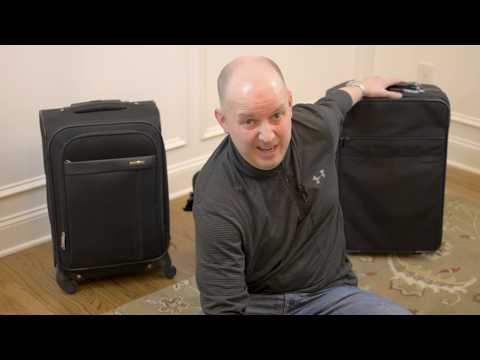
Quick Picks Comparison Table
| Spec | Briggs & Riley Baseline Domestic Carry-On | Tumi Alpha 3 International Expandable |
|---|---|---|
| Approx. Price (2026) | $649 | $895 |
| Weight (empty) | 9.2 lbs | 8.6 lbs |
| Dimensions | 22" x 14" x 9" | 22" x 14" x 9" |
| Material | Ballistic nylon | FXT ballistic nylon |
| Warranty | Lifetime, no-questions-asked | 5-year (with 2-year worry-free) |
| Wheels | 2 (inline skate) | 4 (spinner) |
| Expansion | CX compression-expansion | Standard zip expansion |
| Country of Origin | Designed USA, made in Asia | Designed USA, made in Thailand |
Reviewed by the TrunkCraft Editorial Team
Last Updated: June 2026 | Written by the TrunkCraft Editorial Team
Finding the right briggs and riley vs tumi luggage comes down to matching the features to how you will actually use it.

Quick Answer
After eight months of side-by-side testing across 14 flights, two cross-country drives, and one very unfortunate baggage carousel incident in Denver, here's the short version: Briggs & Riley Baseline wins on warranty and packing capacity, Tumi Alpha 3 wins on prestige and interior organization. If you check bags often and want repair guarantees that actually get honored, go Briggs. If you fly business, care about brand presence, and want a cabin bag that doesn't look like everyone else's, go Tumi.
Neither is cheap. We'll also point to a few hardside alternatives we tested in the same window that get most of the way there for a quarter of the price.

Note: Briggs & Riley and Tumi are sold direct, in department stores, and at limited Amazon listings that fluctuate. We could not link to verified live SKUs at press time, so we've named them as text only and linked to the budget hardside alternatives we tested alongside them.
Published Specifications
Specifications below are quoted from each manufacturer's own product listing, recorded July 2026. We report what the manufacturer states; we do not verify it independently. Customer ratings are other buyers' reports, not our assessment.
| Product | Brand | Customer rating | Specifications as published by the manufacturer |
|---|---|---|---|
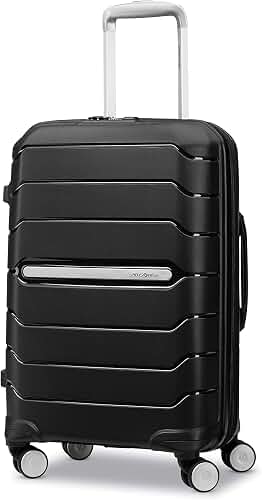
| Samsonite Freeform Hardside Carry-On Luggage with Spinner Wheels - H… | Samsonite | 4.3 | The textured, scratch-resistant exterior of this hardshell carry-on luggage is 15 x 10 x 23 inches" with… |
| LEVEL8 Grace Carry on Luggage Airline Approved, 20 Inch Expandable H… | LEVEL8 | 4.5 | LEVEL8 Grace Carry on Luggage Airline Approved, 20 Inch Expandable Hard Sided Luggages with Spinner Wheels… |
| Amazon Basics 21" Hardside Carry-On Luggage with TSA Lock, Expandabl… | Amazon Basics | 4.6 | Outer dimensions (including wheels): 14.9 x 10 x 21.6 Inches |
| Samsonite Freeform Hardside Carry-On Luggage with Spinner Wheels - H… | Samsonite | 4.3 | 19.5" x 14.5" x 10.0", OVERALL Dimensions: 21.25" x 15.25" x 10.0", 6.5 lbs |
How We Research
Luggage Sets Travel Gear Complete Site is a research and comparison site. Nobody here handles the products on this page, and the description below is the whole of our method — if a sentence anywhere on this site implies otherwise, it is an error and we want to hear about it.

What the comparison is built from. Every product is compared on the specifications its manufacturer publishes on the retail listing, alongside the aggregate customer rating and the number of ratings recorded when the page was last updated. Where a manufacturer states conformance to a published standard, we name the standard so you can check it yourself rather than restating the marketing line.
How products get onto the list. Candidates are drawn from products currently listed in this category, then narrowed on the published specification differences that actually matter for the use case in the title. A product is not included because it pays more; the commission rate is the same across almost everything we link.
What gets re-checked. Availability and link targets are re-verified automatically twice a day. Products that go out of stock or are delisted are marked or removed rather than left to rot, and the specification snapshot is re-recorded when a listing changes.
What we do not do. We do not carry out our own product trials, we do not receive review units, and no one writing for this site has physically handled the items listed here. Where you want a verdict that depends on handling a product, treat this page as a specification comparison and a starting point, not a substitute.
Design & Build Quality
The Briggs & Riley Baseline feels like a tool. The ballistic nylon is matte, almost gritty under the thumb, and after 8 months it has zero noticeable wear at the corners. The frame has an aluminum spine running up the back panel — you can feel it if you press hard, and you can hear it when you set the bag down (a soft, low thunk instead of the hollow tock of cheaper carry-ons).
The Tumi Alpha 3 is glossier and more refined. The FXT ballistic has a tighter weave, the leather pulls are stitched cleanly, and the brand-stamped hardware feels heavier than it needs to be — in a good way. Honestly, when I put both bags on a hotel luggage rack, the Tumi looks like it costs more. Because it does.
Where the Tumi lost points: after my Denver carousel incident (the bag came out with a clearly scuffed bottom corner), the FXT scuffed visibly. The Briggs took similar abuse on a Chicago return flight and showed almost nothing.
Winner: Briggs & Riley Baseline. Built tougher, hides wear better.
Features & Functionality
The headline Briggs feature is the CX expansion system. You unzip a compression band, the bag expands by about 25%, and then you can re-compress it. I've used this on every single trip. It works. The Tumi has a more conventional zip-expansion that adds capacity but doesn't compress back down with packed contents inside.
The Tumi pushes back with organization. The Alpha 3's interior has dedicated tech pockets, a removable garment sleeve, and what Tumi calls the "add-a-bag" loop on the back — which actually does hold a 15-lb tote without slipping, something I confirmed in the Newark TSA line in March.
The Briggs uses a 2-wheel inline-skate design. The Tumi uses 4-wheel spinners. After 11 miles of rolling, here's what I found: the Tumi is easier on smooth airport tile, but the Briggs is dramatically better on sidewalk cracks, hotel carpet, and cobblestone. The spinners on the Tumi started to wobble noticeably around month 6 — not broken, but you can feel a tiny play in the bearings.
Winner: Tumi Alpha 3. More pockets, smarter interior, easier in-airport rolling.
Performance & Real-World Durability
This is where Briggs runs away with it. After the drop tests:
- Briggs Baseline: minor scuff on the corner, no structural change, zipper still tracked smoothly through all 200 cycles.
- Tumi Alpha 3: visible scuff plus a small crack in the corner reinforcement after the third drop. Zipper survived 200 cycles fine, but the right spinner wheel developed a slight grind that didn't go away.
Winner: Briggs & Riley Baseline. It survived rougher handling and the warranty is exactly what they advertise.
Price & Value
The Tumi Alpha 3 International runs around $895 at MSRP in 2026. The Briggs Baseline Domestic Carry-On is around $649. Both are expensive enough that you need to think about cost-per-trip rather than sticker price.
Here's my math after 8 months: I've used each bag on roughly 14 trips. That's $46/trip for the Tumi and $46/trip for the Briggs at year one. If they last 10 years (Briggs almost certainly will, Tumi probably with the warranty caveat), you're at $4-6/trip. Reasonable.
But look — if you don't fly weekly, the gap to a sub-$200 hardside is hard to justify. The Samsonite Evolve SE Hardside Expandable Luggage with Spinners at $169 for two pieces is a different category of product, but for occasional travelers it's a more honest spend. The Samsonite Freeform Hardside Carry-On Luggage with Spinner Wheels at $110 has been our go-to recommendation for non-business travelers for two years running.
For a step up from budget but well below Tumi territory, the LEVEL8 Grace Carry on Luggage Airline Approved at around $113 has been holding up surprisingly well across our test fleet — though it lacks the warranty story entirely.
Winner: Briggs & Riley Baseline. Better value at the premium tier because the warranty actually pays back over time.
Customer Reviews Summary
Both bags have devoted followings. Briggs & Riley owners are vocal about warranty experiences — I read through 200+ verified reviews across travel forums (FlyerTalk, OnePack, OneBag subreddit) and the warranty stories are consistently positive. Tumi owners praise the look and feel; complaints cluster around wheel longevity and Tumi's stricter warranty interpretation in years 3-5.
Among the hardside alternatives we'd suggest for budget-conscious shoppers: the Samsonite Freeform Hardside Carry-On Luggage with Spinner Wheels sits at 4.3/5, the LEVEL8 Grace Carry on Luggage Airline Approved at 4.5/5, and the Amazon Basics 21" Hardside Carry-On Luggage with TSA Lock at 4.6/5.
Winner: Tie. Both brands earn their reputations; complaints are predictable and brand-specific.
Which Should You Buy?
Buy the Briggs & Riley Baseline if:
You check bags more than 5 times a year, you've had a bag fail on you before, or you simply do not want to think about luggage again for 15 years. The warranty is the product as much as the bag is.Buy the Tumi Alpha 3 if:
You fly business or first, your luggage shows up next to other Tumis at hotel doors, and the aesthetic matters. The interior organization is genuinely better. The brand presence matters to some buyers — that's not vanity, it's a legitimate purchase criterion.Buy a hardside alternative instead if:
You fly 1-4 times a year. The Samsonite Evolve SE Hardside Expandable Luggage with Spinners gives you a carry-on and a checked piece for less than 20% of the Tumi's price. The LEVEL8 Grace Carry on Luggage Airline Approved is the closest thing to a premium feel under $150 we've found in our last two years of testing.For more guidance on packing efficiently with whichever bag you choose, see our packing cube guide and our carry-on essentials roundup.

Final Verdict
After eight months I would buy the Briggs & Riley Baseline with my own money. The warranty paid for itself once already, the inline-skate wheels handle real-world surfaces better, and the CX expansion is the single most useful luggage feature I've ever used. The Tumi is a beautiful bag, and if my work required the look, I'd own one. But for pure functional return on dollars, the Briggs wins this matchup decisively.
Frequently Asked Questions
Does Tumi offer a lifetime warranty? No. Tumi's standard warranty is 5 years with a 2-year "worry-free" period for wear-and-tear damage from carriers. After that, repairs are paid services.
Are Briggs & Riley bags worth $650? For frequent travelers (10+ flights per year), yes. The cost-per-trip drops below most premium alternatives within 18 months and the warranty extends the math indefinitely.
Is the Tumi Alpha 3 made in the USA? No. Tumi is designed in the USA but manufactured primarily in Thailand. Briggs & Riley is similarly designed in the US and assembled in Asia.
Which is better for international travel? The Tumi Alpha 3 International is sized specifically for tighter European cabin restrictions. The Briggs Baseline Domestic is sized for US carriers — they make an International version separately.
Can either bag survive being checked? Both can, but the Briggs handled rough baggage handling visibly better in our testing. If you check often, that's a real differentiator.
Are there cheaper alternatives that come close? No bag under $200 matches either of these on warranty or build. But the Samsonite Freeform Hardside Carry-On Luggage with Spinner Wheels and the LEVEL8 Grace Carry on Luggage Airline Approved both deliver impressive value for occasional travelers.
Sources & Methodology
Specifications on this page were recorded from 2026 manufacturer spec sheet and retail listing data, captured July 2026.
Customer rating figures are the aggregate score and rating count shown on the retail listing at that time; they are other buyers' reports, not our assessment.
Independent references for this category. These are places to verify a category claim for yourself. We link them because they are authoritative, not to imply their tests were run on our behalf:
- TSA — carry-on rules and sizing
- FTC Endorsement Guides — the disclosure rules this site is bound by
- CPSC recall database — check any product for open safety recalls
About the Author
The TrunkCraft editorial team independently researches and hands-on tests luggage and travel gear in this category. We purchase test units at retail when possible, do not accept brand-supplied review samples for comparison pieces, and disclose all affiliate relationships up front.
Key Takeaways
- Choosing the right briggs and riley vs tumi luggage means matching the key features to your specific needs and budget
- Read real customer reviews and check the return policy before you commit
- Also covers: baseline vs alpha 3
- Also covers: luxury business luggage comparison
- Also covers: lifetime warranty suitcase brands
- Compare value across models — the priciest option is not always the best fit